YouTube and the ever-confusing world of Art Track
What is an Art Track on YouTube?
One of the most common areas of confusion among artists distributing their work on YouTube is Art Tracks. Who can view them? Who owns them? Where do they live? Can I see mine? Wait, do I need any Art Tracks?
Let’s start with a simple definition of “Art Track.”
According to YouTube, an Art Track is an automatically generated YouTube version of a sound recording.
An Art Track consists of:
- the sound recording
- the album art
- and metadata about the recording, such as its title and artist name
“Automatically generated?”
Why do THEY get to generate a second version of MY music?
It’s a funny way to phrase things, but it doesn’t exactly represent the real process for creating an Art Track. Art Tracks, while not directly related to Content ID Administration, can be viewed by those who have access to the Content Management System (CMS). This could be a direct artist, channel, label, or rights administration company (like CD Baby). But, even though they may appear within the CMS like any other sound recording, Art Tracks are actually a part of a completely separate YouTube distribution service called YouTube Music and are not administered or managed via the CMS. Instead, all metadata changes, conflicts, or topic channel assignments are managed directly by YouTube.
Why Do Art Tracks exist in the first place?
The purpose of Art Tracks is to provide a “single official, label-sanctioned YouTube version of every sound recording.”
Once qualified recordings are identified based on their ISRCs, release identifiers (UPC, EAN, GRid), and labels, YouTube will create Art Tracks for each unique combination of these fields. This is YouTube’s attempt to provide as complete a music catalog and experience as they can. Art Tracks appear in the same places and operate in the same ways as produced music videos, (Like topic channels, album playlists, and search results).
If you think about it, Art Tracks are really just simple, auto-generated music videos…which makes sense if you consider that YouTube is trying to provide you with a music streaming experience on a video-only platform.
YouTube as a music streaming service?
The vast majority of music discovery in developed nations is done via YouTube. When a new album drops, or a friend suggests an artist or album someone might like, most folks turn to YouTube.
Almost all modern produced music can be found on YouTube in one form or another. And if an artist has any sort of digital distribution strategy they will likely opt-in for YouTube content ID. This means that YouTube is sitting on the largest collection of digital music in the world. And, at some point, someone in some office somewhere had that lightbulb moment: Why not offer a way for the average YouTube user to stream the music that’s already been delivered to YouTube?
Users were already creating their own DIY Art Tracks and YouTube wanted to provide official representations of every sound recording they could, so they offered current music administrators the option of having Art Tracks created for their music.
What’s the upside of YouTube Art Tracks?
Art Tracks provide:
- better audio quality
- mobile audio-only playback
- music that could be searchable by topic, related artist, and playlist
Furthermore, these topic channels and playlists would be created and managed by YouTube and not individual users. All of this, of course, was by design and in support of the imminent launch of YouTube’s subscription service: YouTube Red.
As a subscriber, you have the ability to listen to every Art Track on YouTube in an audio-only mode that includes all of the goodness of other streaming services, including high-quality audio and genome playlist creation.
Now, anyone on YouTube can search for and listen to any Art Track that exists on the platform. But a cool feature of YouTube Red subscription is that in audio-only mode, it will always favor the high-quality audio of an Art Track over other versions of the song that inevitably exist on YouTube.
So, let’s say you’re listening to a Michael Jackson playlist and Thriller comes on. Instead of having to listen to the drawn out audio of the (amazing) music video that’s probably the most distributed version of that song on YouTube, you’ll be served up the album version in the highest audio quality available.
User-Generated vs Official Art Track videos
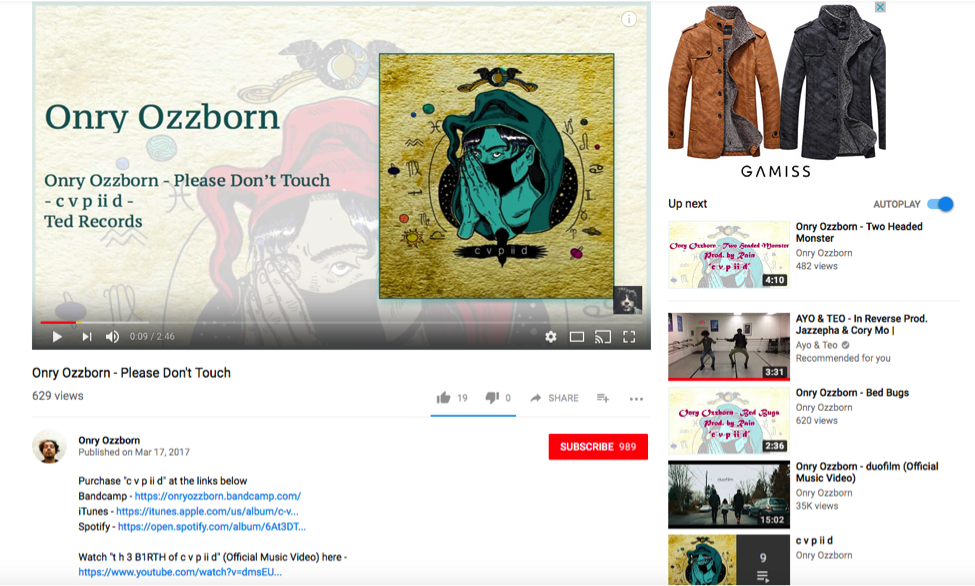
So, Art Tracks are official music videos of songs that are available to all who use YouTube and behave like assets on a music streaming platform. Now let’s pump the brakes here for a minute and look at what an Art Track is to the average observer: it’s a YouTube video that has the artist and song name in the title of the video and displays a static image of the cover art while the song plays.
Not exactly a novel idea. In fact, artists have been throwing together their own version of Art Tracks for years. It’s easy, just upload your album (or your favorite artist’s album) and a pic of the album cover and BAM! You have a user-generated Art Track.
So how does one tell a user-generated Art Track and an official YouTube Art Track apart?
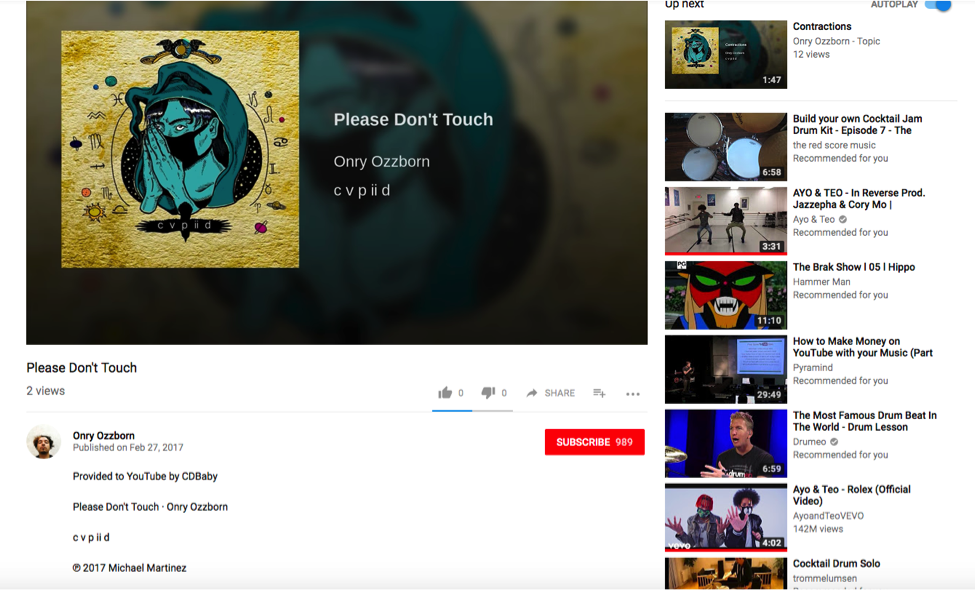
Below are a few examples for your viewing pleasure.
Example #1 – User Generated “Art Track”:
 Example #2 – Official Art Track created by YouTube: